Community
How pieces of Austin history could end up in your living room
By Samantha Kim
Advertisement · Why this ad?
Samantha, a journalism graduate from the University of Texas at Austin, has spent six years covering local events for the Round Rock Leader. Her passion for community engagement drives her coverage of local festivals, fundraisers, and cultural happenings.
More from Samantha →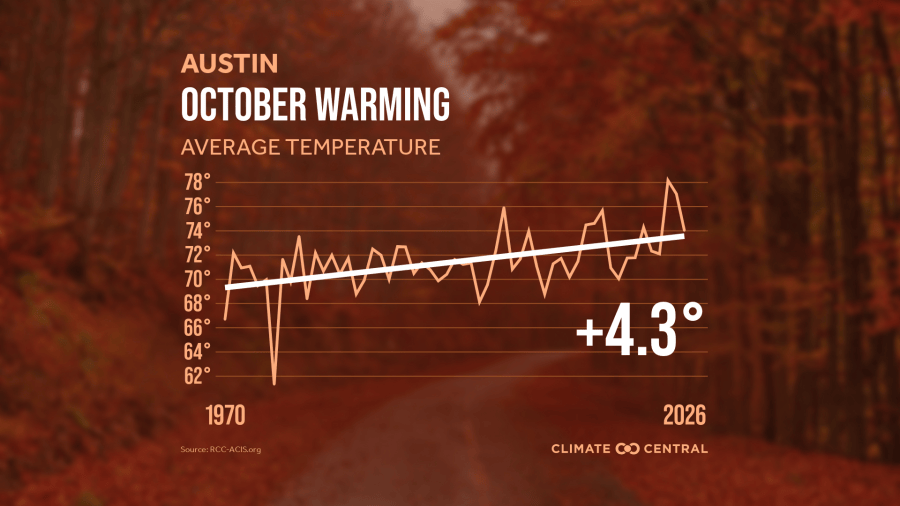
On a sun-drenched October, as families gathered in parks and children darted through the golden leaves, many in Round Rock couldn’t help but notice the unusually warm weather lingering well into fall. It was the kind of October that feels more like late September, with temperatures often climbing into the mid-80s, a stark contrast to the crisp, cool days many remember. For local residents, this warmth wasn’t just a fleeting weather pattern—it was a reminder of the shifting climate that’s quietly reshaping our community’s seasons.
According to a recent report from Climate Central, Austin and surrounding areas experienced above-average temperatures throughout October, a trend that’s becoming increasingly common across Texas. The report highlights that the Lone Star State saw some of its warmest Octobers on record, with temperatures surpassing historical norms by several degrees. While many residents embraced the extended warmth, climate scientists warn that these patterns are part of a larger, more concerning shift in global and regional climate trends.
In particular, Austin’s average temperature for October was approximately 4 degrees higher than the historical average, a statistic that resonates with many who felt the heat during evening walks or outdoor family gatherings. Climate Central’s analysis indicates that such warm spells are likely to become more frequent, impacting everything from local ecosystems to energy consumption. For communities like Round Rock, this means adapting to a future where the seasons may no longer follow the familiar patterns of the past.
For families in Round Rock, the extended warm weather has been a double-edged sword. Many have enjoyed outdoor activities longer into the year, relishing the opportunity to spend more time at local parks such as Old Settlers Park or exploring the trails along Brushy Creek. Maria Lopez, a mother of three, shared how her children’s soccer practices extended into late October, a sight she’s grateful for but also cautious about what it signals. “It’s wonderful to have more days outside, but I worry about what this means for our summers and water use,” she said.
Community leaders and residents alike are beginning to recognize the tangible effects of climate change. The Round Rock Chamber of Commerce has started discussions about sustainability initiatives, aiming to educate local businesses and families on reducing their carbon footprint. Pastor James Carter of First Baptist Church emphasized the importance of faith-driven stewardship: “Our duty is to care for God’s creation, and that includes understanding how our climate is changing and taking steps to preserve it for future generations.” These conversations reflect a broader awareness that climate change isn’t just a distant issue but one that impacts daily life in Round Rock.
The implications of these shifting climate patterns extend far beyond just warmer days. For Round Rock, a rapidly growing city with a population approaching 130,000, the changing weather impacts everything from water resources to local agriculture. Our community’s economy, heavily reliant on small businesses, outdoor recreation, and tourism, is sensitive to environmental changes. Parks like Old Settlers Park, which hosts annual festivals and community events, see increased visitation during warm months, but prolonged heat can strain infrastructure and natural resources.
Furthermore, local farmers and landscapers are already noticing alterations in planting seasons and water availability. The Texas A&M AgriLife Extension Service reports that warmer temperatures can lead to earlier flowering and harvest times for certain crops, but they also increase the risk of drought stress and pest outbreaks. These shifts threaten the stability of local food systems and the livelihoods of those who depend on agriculture and horticulture.
Community health experts are also raising alarms about the health impacts of prolonged heat exposure, especially for vulnerable populations such as the elderly and children. Heat-related illnesses can increase, and the demand for cooling resources and emergency services rises accordingly. As such, understanding and preparing for these changes is crucial for the resilience of Round Rock’s health infrastructure.
Meet John Martinez, a 45-year-old landscaper who owns a small business serving residential and commercial clients throughout Round Rock. John has noticed that his workload has shifted; clients are requesting more drought-resistant native plants and irrigation systems designed to conserve water. “The weather has definitely changed,” he says. “I’ve had to learn new techniques to help my clients adapt, and I worry about how much more extreme it might get.” His story exemplifies how local professionals are on the front lines of climate adaptation.
Similarly, Maria Lopez’s family, like many others, is adjusting their outdoor routines. Her children’s soccer practices now often take place in the late afternoon, and she’s been installing rainwater harvesting barrels to help conserve water during the drier months. These personal stories underscore a community-wide effort to adapt and prepare for a warmer future.
Looking ahead, local officials are exploring strategies to adapt to these changing conditions. The City of Round Rock has committed to expanding green spaces and promoting water conservation efforts, especially as the warmer months may become more intense. The community is also encouraged to participate in educational programs offered through the Round Rock Parks and Recreation Department to learn about sustainable living practices.
In addition to municipal initiatives, local nonprofits and citizen groups are organizing community workshops focused on climate resilience. These include training on drought-tolerant landscaping, rainwater harvesting, and energy efficiency. Schools are also integrating climate education into their curricula to foster a new generation of environmentally conscious residents.
As the climate continues to shift, residents are reminded that individual actions—such as planting native trees, conserving water, and supporting renewable energy—can collectively make a difference. The community’s resilience will depend on how well we adapt and unite around the common goal of protecting our environment. With faith, family, and community at the heart of Round Rock’s identity, there’s hope that we can meet these challenges with strength and resolve.
In the end, October’s warmth was more than just a weather anomaly; it was a call to action. As families enjoy the lingering sunshine, they are also called to reflect on their role in stewarding the land and future. Together, our community can turn awareness into action, ensuring that Round Rock remains a vibrant, welcoming place for generations to come.
By Samantha Kim

By Samantha Kim
By Samantha Kim
By Samantha Kim